Updated for the 2026/27 season
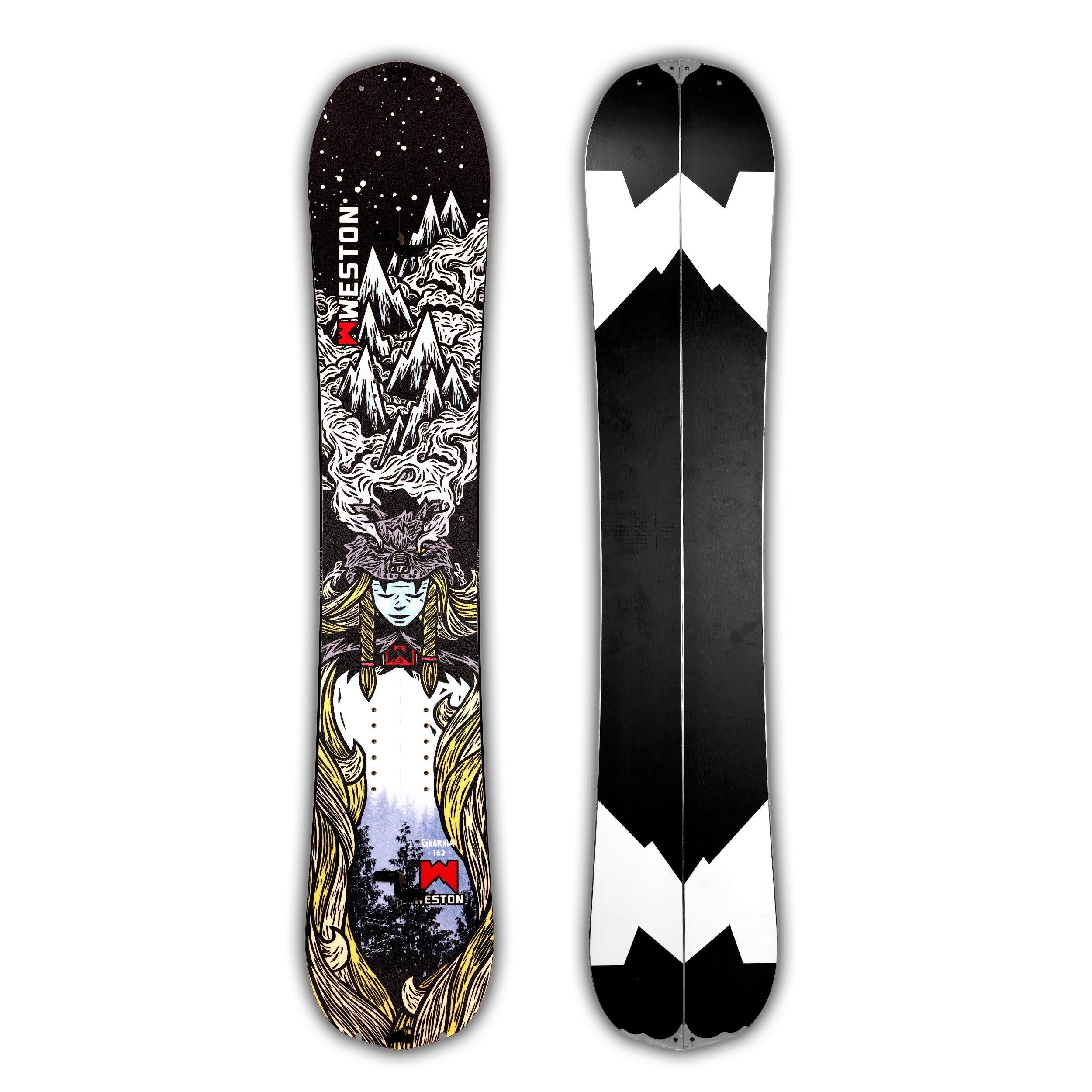
The Weston Gnarnia Split is Weston’s new big-freeride weapon for 25/26 — a tapered directional splitboard built for riders chasing big objectives in variable conditions. Freedom Split Core, S-Weave Carbon for maximum pop, and a 9mm taper that gives float without going full-powder-specific. Backcountry Magazine Gear Guide Select 2026. Artwork by John Fellows. New this season.
Who is the Weston Gnarnia Split for?
The Gnarnia is made for advanced to expert freeride riders who tour into steep, technical terrain and want a board that charges hard on the descent. The shape sits between the versatile Backwoods (heavier, more all-condition) and a dedicated powder board — it float-rides well in deep snow but holds its ground in variable and firm conditions. Flex around 7/10.
Available in regular and wide versions from 147 to 166W cm. Size by weight — the weight ranges are specific per size because the flex and taper are calibrated accordingly.
Construction & Specs
- Shape: Tapered Directional
- Profile: Freeride
- Core: Freedom Split Core — Poplar + Paulownia + Bamboo (lighter than Slayer Core)
- Layup: Triax Fiberglass
- Carbon: 1x Tip to Tail + S-Weave Carbon (woven through core for pop)
- Base: Sintered DuraSurf 4001 — holeless
- Sidewalls: UHMW (Ultra-High Molecular Weight Polyethylene)
- Topsheet: Castor Bean-based Rugged Nylon
- Touring hardware: Karakoram UltraClip 2.1 + Tip-Loc
- Binding position: Shifted touring bracket — easier kick turns
- Skin attachment: Tip holes + tail notches
- Award: Backcountry Magazine Gear Guide Select 2026
- Warranty: 4 years
Size & Weight Guide
| Size | Rider Weight (kg) | Rider Height (cm) | Effective Edge | Waist Width | Taper | Board Weight |
|---|---|---|---|---|---|---|
| 147 | 41–68 kg | 155–165 | 112 cm | 24.4 cm | 9 mm | 2760 g |
| 151 | 48–75 kg | 163–173 | 115 cm | 24.6 cm | 9 mm | 2950 g |
| 154 | 48–75 kg | 163–173 | 119 cm | 25.2 cm | 9 mm | 3130 g |
| 158 | 57–84 kg | 170–180 | 122 cm | 25.6 cm | 9 mm | 3260 g |
| 162 | 66–93 kg | 178–188 | 125 cm | 26.2 cm | 9 mm | 3430 g |
| 162 Wide | 75–102 kg | 178–188 | 125 cm | 27.3 cm | 9 mm | 3580 g |
| 166 Wide | 82+ kg | 185+ | 128 cm | 27.6 cm | 9 mm | 3580 g |
Freedom Split Core: What’s Different?
The Gnarnia uses the Freedom Split Core — a Poplar/Paulownia/Bamboo mix — instead of the Slayer Split Core found in the Backwoods and Eclipse. Paulownia has one of the best strength-to-weight ratios of any wood, making the Gnarnia noticeably lighter for its size. The S-Weave Carbon is woven through the core from topsheet to base, creating a spring-like energy return that concentrates pop throughout the board rather than just at the tail.
The result: a board that feels more alive and responsive underfoot compared to the Backwoods, especially at speed in aggressive terrain.
Ride Feel
The 9mm taper is conservative compared to the Japow (25mm) — the Gnarnia sits closer to a traditional directional shape than a powder-specific one. In deep snow it floats well, but it will not effortlessly rise nose-up the way a swallowtail or high-taper board does. What it does instead: hold a line precisely on steep terrain, respond immediately to edge pressure, and carve with authority on firmer snow.
The S-Weave Carbon adds a noticeable snap through turns. Riders who like to pop off natural features and redirect hard will feel it most. On long sustained turns at speed, the torsional stiffness from the carbon keeps the board planted without chatter.
Uphill Performance
The Freedom Split Core keeps the Gnarnia among the lighter boards in Weston’s lineup: 2760g for the 147, 3260g for the 158. The Karakoram UltraClip 2.1 is quick to transition. The shifted touring bracket and 10–20mm setback (varies by size) improve kick turn ergonomics on steep approaches.
Skin selection: Skin 1 for 147/151, Skin 2 for 154, Skin 3 for 158, Skin 4 for 162, Skin 5 for 162W/166W.
Gnarnia vs. Backwoods: What to Choose?
Both are freeride-oriented tapered directional splitboards. The key differences: the Gnarnia uses a lighter core (Freedom vs Slayer), the S-Weave Carbon for more pop, and a tighter 9mm taper (vs 18mm on Backwoods). The Backwoods floats better in deep powder due to more taper; the Gnarnia is snappier and lighter for the same size, making it better for aggressive technical riding where weight matters.
Verdict: Weston Gnarnia Split
The Gnarnia is the right choice if you want a freeride-biased splitboard that is lighter than the Backwoods and more responsive in technical terrain. The S-Weave Carbon core, Backcountry Magazine’s 2026 recognition, and competitive weight make it a strong option for experienced splitboarders who push into committing lines. New this season — early reviews from Weston’s athlete and guide team are positive.
If you want more powder float, look at the Japow Split. If you want a proven all-rounder with more taper, the Backwoods Split is the choice. For dedicated aggressive freeride use, the Gnarnia.
→ View all Weston splitboards · → Compare freeride splitboards
Frequently Asked Questions
Is the Weston Gnarnia Split new for 2026?
Yes — the Gnarnia is new for the 25/26 season. Weston introduced it alongside the Dream Machine as part of a lineup refresh, replacing some of the discontinued models. It was awarded Backcountry Magazine’s Gear Guide Select in its debut season.
What size Gnarnia Split should I ride?
Size by weight: 147 for 41–68 kg, 151–154 for 48–75 kg, 158 for 57–84 kg, 162 for 66–93 kg, Wide versions for larger boot sizes (US 12+) or heavier riders. The weight ranges overlap on some sizes — go longer for more stability and float on open faces, shorter for tighter terrain.
How does the Freedom Core compare to the Slayer Core?
The Freedom Core uses Paulownia wood alongside Poplar, resulting in a lighter build. Paulownia has excellent strength-to-weight ratio, making boards with this core noticeably lighter. The trade-off is a slightly different flex character — typically livelier and more playful at lower speeds compared to the Slayer Core’s more damp, planted feel.
User Reviews
There are no reviews yet. Be the first one to write one.