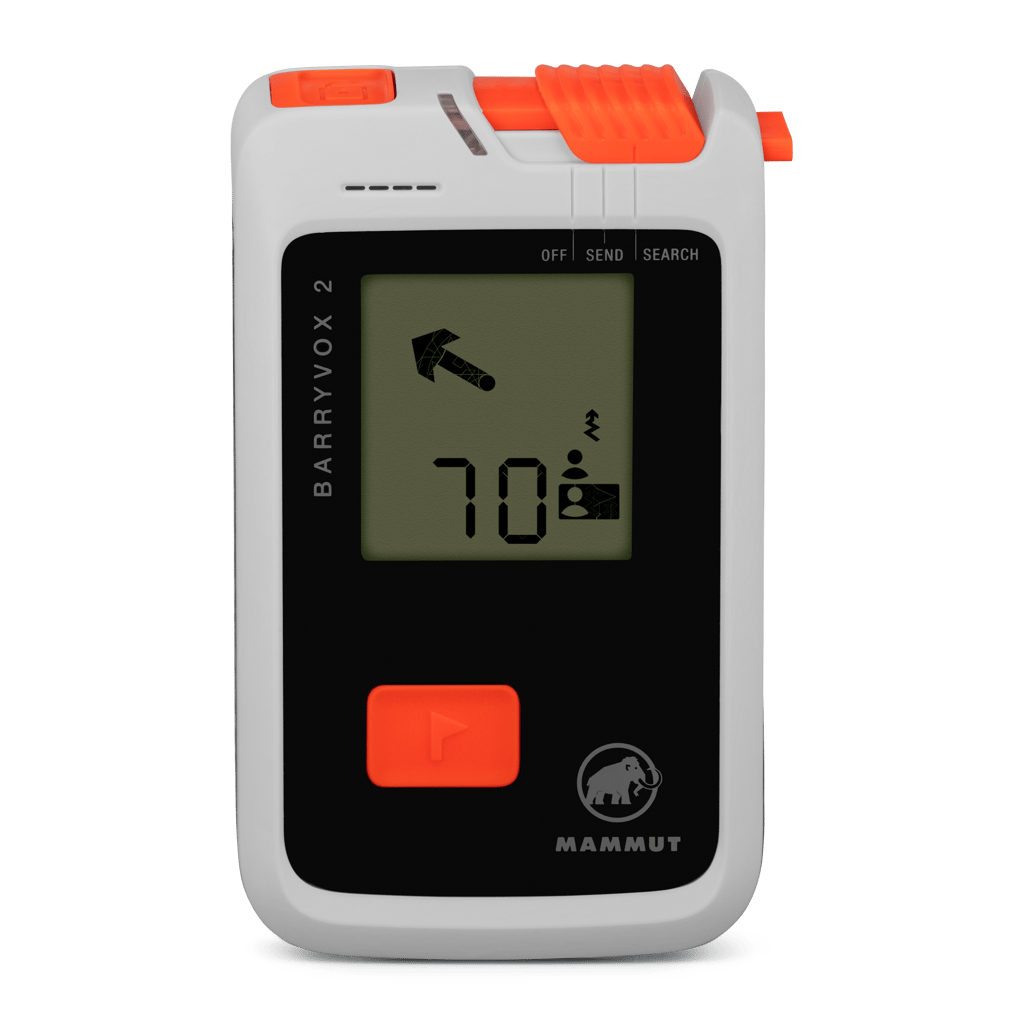
Most riders don’t need the flagship, and shouldn’t settle for the cheapest. Here’s the beacon that hits the sweet spot — and exactly why it works for beginners and seasoned tourers alike.
Before anything else: your training matters more than your beacon.
An all-round transceiver is only “all-round” in trained hands. The device points you in a direction; you run the search, dig the pit, and manage the clock. Take an avalanche course, practise your companion rescue until it’s second nature, and rehearse it before you head off-piste — not on the day you need it. A great beacon with no practice is worse than a basic beacon you know cold.
What “all-round” actually means
An all-round beacon isn’t a compromise — it’s a deliberate balance:
- Enough range to find a signal fast, without the pro-level price.
- A clean, intuitive interface so a nervous first-timer and a calm veteran both get the same clear guidance.
- Full multiple-burial marking, so it grows with your skills instead of capping them.
- A sensible weight and battery setup you’ll actually carry every tour.
Get those four right and you’ve got a beacon that works on your third tour and your three-hundredth.
Our pick: the Mammut Barryvox 2
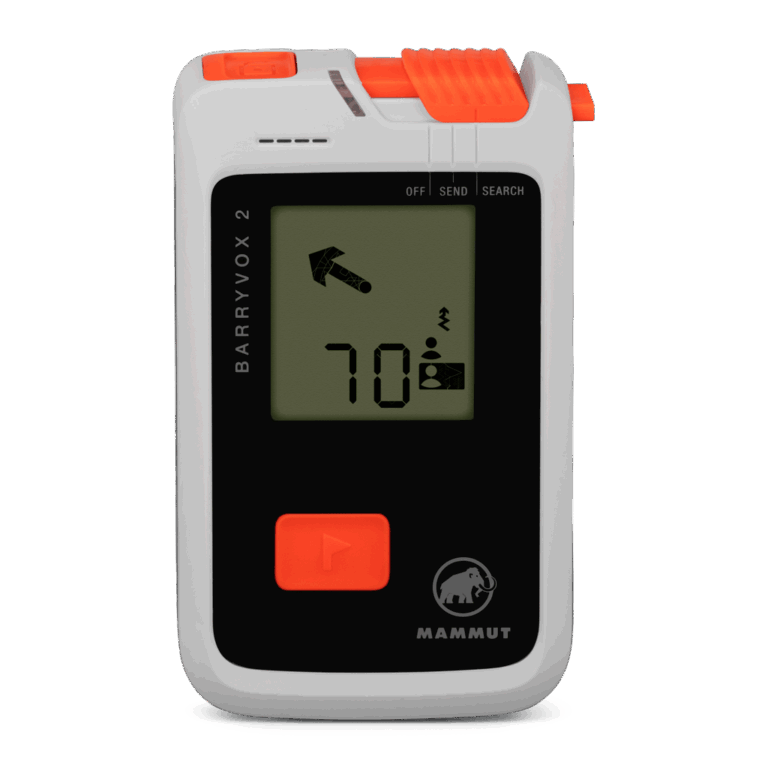
The Mammut Barryvox 2 (€380) is the beacon we’d hand to the widest range of riders. It shares the same three-antenna hardware, 70 m range and 70 m search strip as the flagship Barryvox S2 — so you’re not buying a watered-down search — but drops the pro-only extras that most people never touch. At 180 g on two AAA batteries, with a genuinely intuitive interface and Bluetooth for firmware updates, it does everything a recreational tourer needs and nothing they don’t.
Here’s the key insight: the Barryvox 2 gives you flagship-level finding performance at a mid-range price. The money you save over an S2 isn’t performance you’re missing in the debris field — it’s features aimed at guides and patrollers.
- Buy it if you want one beacon that’s easy to learn, quick to search, and good enough to keep for a decade.
- Skip it if you’re a professional who needs analog mode and deep configurability (look at the Barryvox S2 or Pieps PRO IPS), or you want a rechargeable battery (the Ortovox Diract Voice has that).
Strong alternatives, and who they’re for
The Barryvox 2 is our default, but two others earn a real look:
- Ortovox Diract Voice (€360) — voice navigation talks you through the search and a USB-C rechargeable battery means no more loose AAAs. Brilliant for anyone who wants extra reassurance under stress.
- Pieps MINI IPS (€299) — the compact, feature-complete option if pocketability and price matter most.
Why the middle beats the extremes for most people
Go too cheap and you sacrifice search strip width, speed in multiple burials, and updatability — real disadvantages when minutes matter. Go straight to the flagship and you pay for professional features that sit unused in your menus. The all-round tier is where recreational riders get 95% of the performance for a fair price, in a package that’s easy enough to actually master.
And mastering it is the whole point. The Barryvox 2 is a superb beacon — but it’s your training that turns it into a rescue. Buy the device, then put in the reps at a beacon park before the powder days start.
Written by Splitboard-Specialist — based on specs, no test rides, no sponsoring. Beacon safety is never a substitute for formal avalanche education.
Leave a Reply