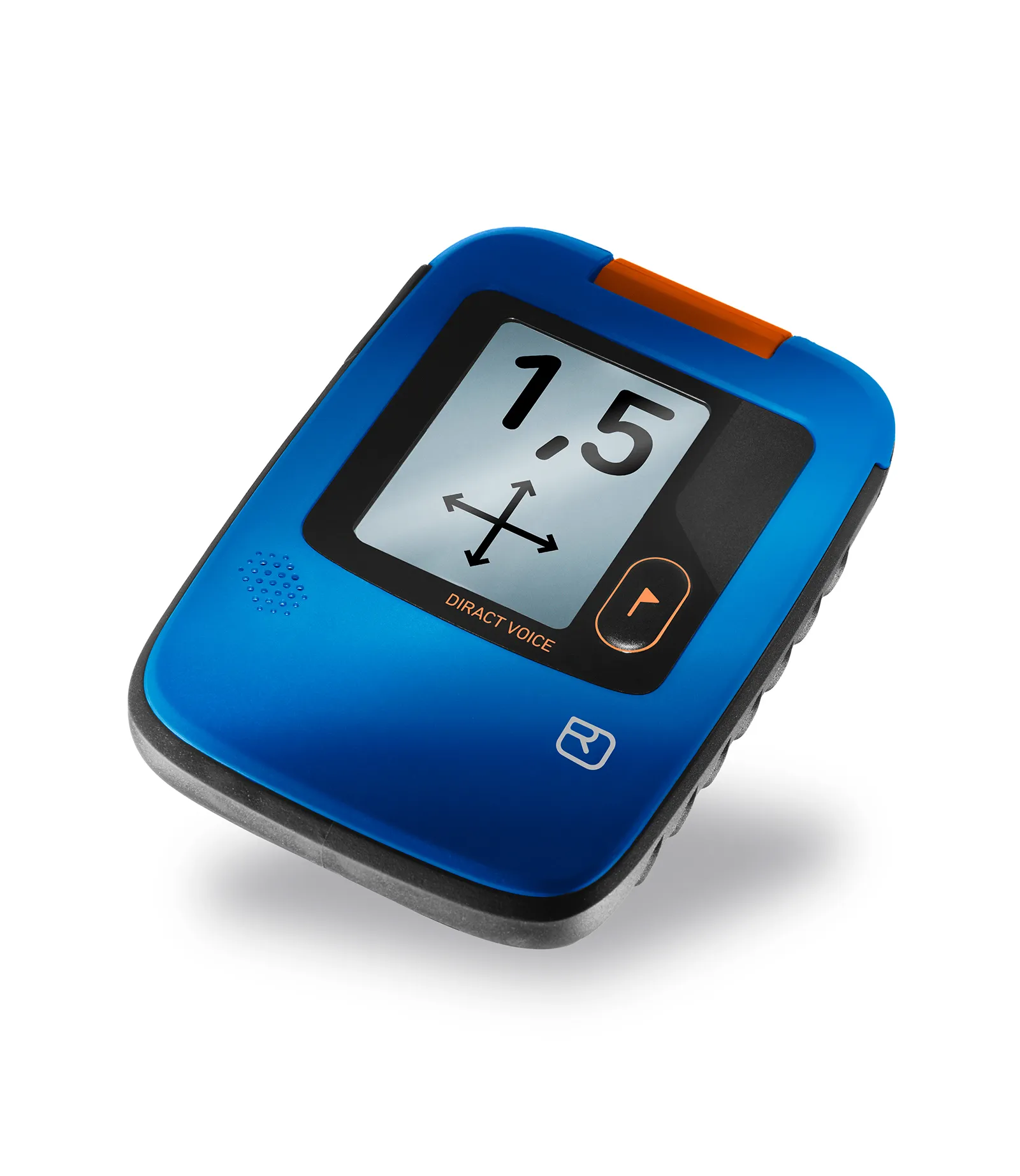
One transceiver actually speaks to you during a search — telling you where to go and what to do next. Here’s how the Ortovox Diract Voice works, and a plain-English walkthrough of using it when it matters.
First, the rule that outranks any feature: practice beats hardware.
Voice guidance is a brilliant aid, but it does not replace training — it supports trained instinct. The Diract Voice will tell you to slow down or turn; it can’t dig, it can’t triage, and it can’t stay calm for you. Take an avalanche course, drill the full companion rescue, and rehearse it before you go off-piste. Treat the voice as a co-pilot, never an autopilot.
Why voice guidance is a genuinely useful idea
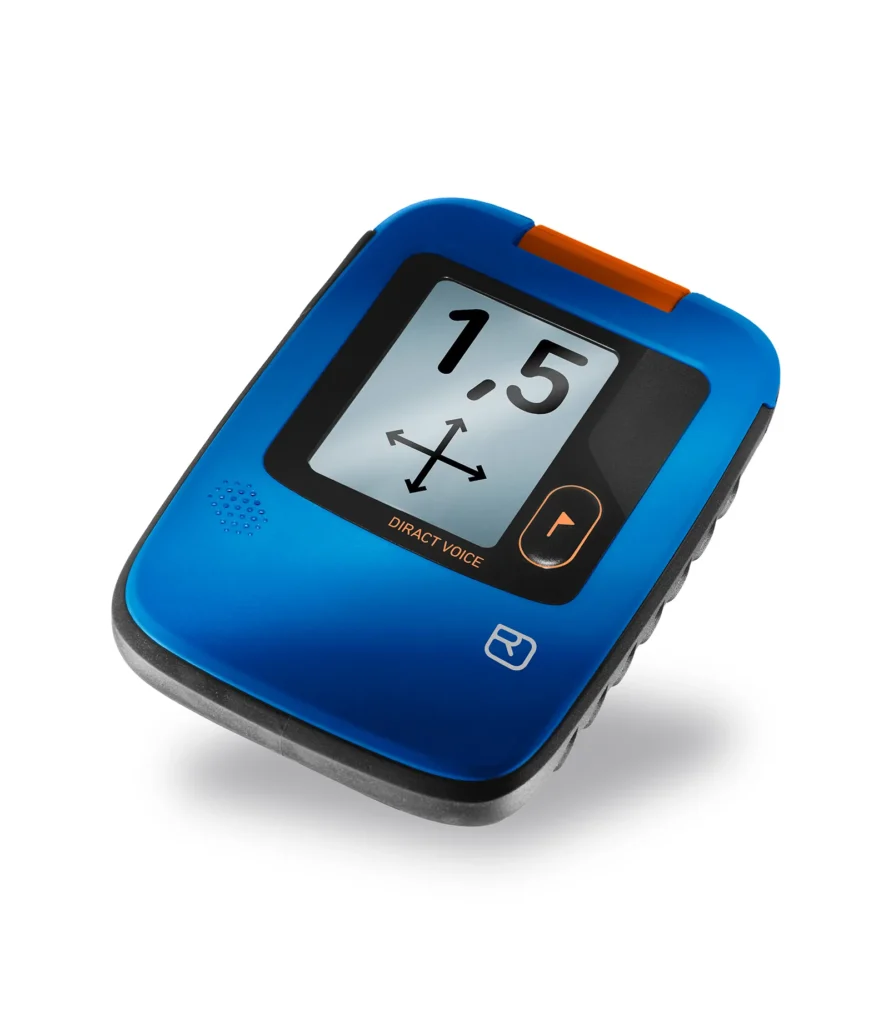
Under real avalanche stress, two things collapse: fine motor control and the ability to read a screen while moving. The Ortovox Diract Voice (€360) tackles both by speaking the instructions out loud — “go left,” “run,” “slow down” — so your eyes stay on the debris surface and your hands stay free. For a stressed or less-experienced searcher, that’s a real advantage.
The rest of the package is solid mid-range: three antennas, a 50 m search strip, marking for up to four victims, Ortovox’s Smart-Antenna Technology (it picks the best transmitting antenna based on how the device lies in the snow), and a USB-C rechargeable low-temperature battery that stays reliable to −20 °C and won’t leak like alkalines can.
How to use it: a plain-English walkthrough
This is a general overview, not a replacement for the manual or a proper course. Learn the real thing in a beacon park with an instructor first.
1. Before you leave — the group check.
Switch the Diract Voice on; it runs a self-test and shows battery status. At the trailhead, do a group check so you confirm every device in the party transmits correctly. Then everyone switches to SEND and carries the beacon in its harness, against the body — never loose in a pocket.
2. If a slide happens — switch to SEARCH.
The moment you’re a witness and the scene is safe to enter, slide the beacon to SEARCH. Call the emergency number. Note the victim’s last-seen point.
3. Signal search — cover the debris.
Sweep the avalanche debris in strips until the device picks up a signal. With a 50 m strip width, keep your search lines close enough to overlap. The Diract Voice stays mostly quiet here until it has something.
4. Coarse search — follow the voice.
Once it locks a signal, the beacon speaks the direction and distance and the display backs it up with an arrow. Follow the guidance, keep the beacon steady in front of you, and watch the distance number fall. When it says slow down, slow down.
5. Fine search — get low, go slow.
Around 3 m, drop to the snow and move the beacon slowly and level, following the voice to the lowest distance reading. Bracket the smallest number — that’s your spot.
6. Mark, probe, dig.
Mark the point, then confirm with your probe in a spiral out from the lowest reading. Strike, leave the probe in, and start shovelling downhill of it. In a multiple burial, press the flag/mark button to have the beacon set the found victim aside and guide you to the next signal.
7. Watch for a secondary slide.
If you stop moving, the motion sensor reverts the beacon to transmit after a set time — protecting you if another slide comes down. Keep that in mind and keep moving deliberately.
- Buy it if you want a beacon that lowers the stress of searching and a rechargeable battery you don’t have to think about.
- Skip it if you need maximum range for guiding (look at the Pieps PRO IPS or Mammut Barryvox S2) — the Diract Voice’s 50 m strip is built for recreational touring, not patrol-scale reach.
The honest takeaway
The Diract Voice is one of the friendliest beacons to use under pressure, and the spoken guidance is more than a gimmick — it keeps your head up and your hands working. But the voice only tells you what a trained searcher already knows. It shortcuts your eyes and screen, not your skills.
So do the work the device can’t: take the course, run the drills, and rehearse your rescue before the first backcountry lap of the season. Buy the beacon, then make yourself worthy of carrying it.
Written by Splitboard-Specialist — based on specs, no test rides, no sponsoring. Beacon safety is never a substitute for formal avalanche education.
Leave a Reply